Vexy Lines × Albert Kapr
Vexy Lines: Retro poster revival story
Vexy Lines revives an East German football poster by Albert Kapr, then follows its single-color printing logic into three contemporary versions.
Poor print, perfect pixels, sharp curves.
In the 20th century, books, newspapers, and advertising posters were often printed fast, in one color on absorbent paper, with a press that could not hold fine tonal detail.
To work around the limits of the printing, designers used halftoning. Over time the technique became a style, and the halftone dots grew coarse and oversized on purpose.
A mobile screen shows every pixel cleanly, in full color. So today, an oversized halftone does the opposite job: it adds a hint of analog noise back into that clean digital image.

Speed & impact.
A few decades ago, building walls in cities were filled with posters that were printed quickly in one color on absorbent paper and a press that could not hold fine tonal detail.
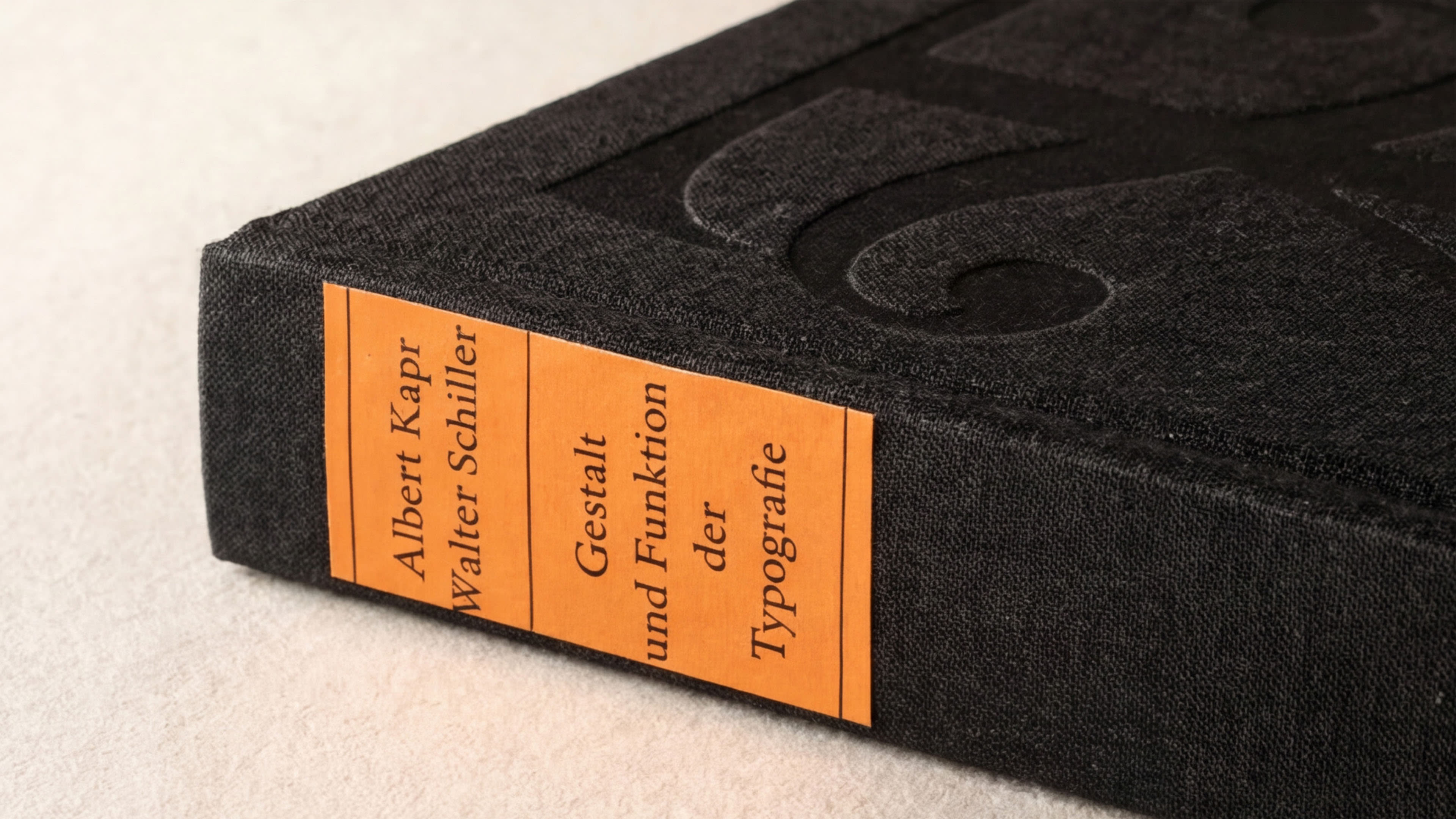
The 1977 book “Gestalt und Funktion der Typografie” by Albert Kapr and Walter Schiller showed how to smartly use linear halftoning to create an impactful design despite the harsh reproduction conditions.
Kapr’s design system transcended the print limitations. Its aesthetics are compelling. Let’s revive it with Vexy Lines.

From scan to grayscale.
We rebuilt the 50-year-old poster design with digital tools.
- Page extraction. We scanned the spread from Kapr’s book at hi-res and deskewed.
- Photo reconstruction. The original photo of two footballers' feet had oversized linear halftone. We hallucinated continuous tones with Google’s Nano Banana generative AI.
- Typography. We picked digital fonts close to faces available to 1970s East German printers: Egyptienne LT for headlines, Futura 100 for dates, Bauer Grotesk for everything else.
- Club monogram. We redrew the football club’s identity mark in FontLab.


Recomposed, then loaded.
We assembled the photo, type and mark in Adobe Illustrator. The hallucinated photo is low resolution, which isn’t optimal for a large poster.
Ideally, everything on the poster should be vector graphics, so the retro aesthetic is produced in a form that’s sharp, clean, and infinitely scalable.

Source image as signal.
We drop the grayscale photo to Vexy Lines as a Source image. It stays behind the output, and acts as Signal:
Vexy Lines will make the vector strokes thicker if the underlying image is darker.

One Linear fill draws the full image.
No tracing, no manual paths. Change a parameter and the linework is recalculated from the grayscale source.
Add a horizontal Linear fill, experiment with optimal stroke spacing and thickness range.
The faithful redraw.
Kapr’s original used parallel lines. Our version follows that logic closely: continuous strokes whose thickness changes with the source luminance.
Black on white. The same practical line-screen idea, rebuilt as vector artwork that can scale far beyond the original print.


Same line structure, with color. Because.
We asked AI to colorize the photo, and we turned on Dynamic color in Vexy Lines — and the old single-ink limit is gone.

Color palette unlocked.
The original was monochrome because the print job required it. Here, the parallel-line structure remains, but the lines can carry hue: a warm pass over a cool ground, with intensity tied to the source value.
Kapr’s poster was monochrome. But within the technical limits of the intended production path, it was maximalist in a way.
The technical limitations no longer exist, so we can ask:
What would Kapr do today?

Color, but louder.
An advertising poster’s job is to catch attention.
Paper reflects light. A screen emits it. Different strategies are needed to catch the user’s eye.
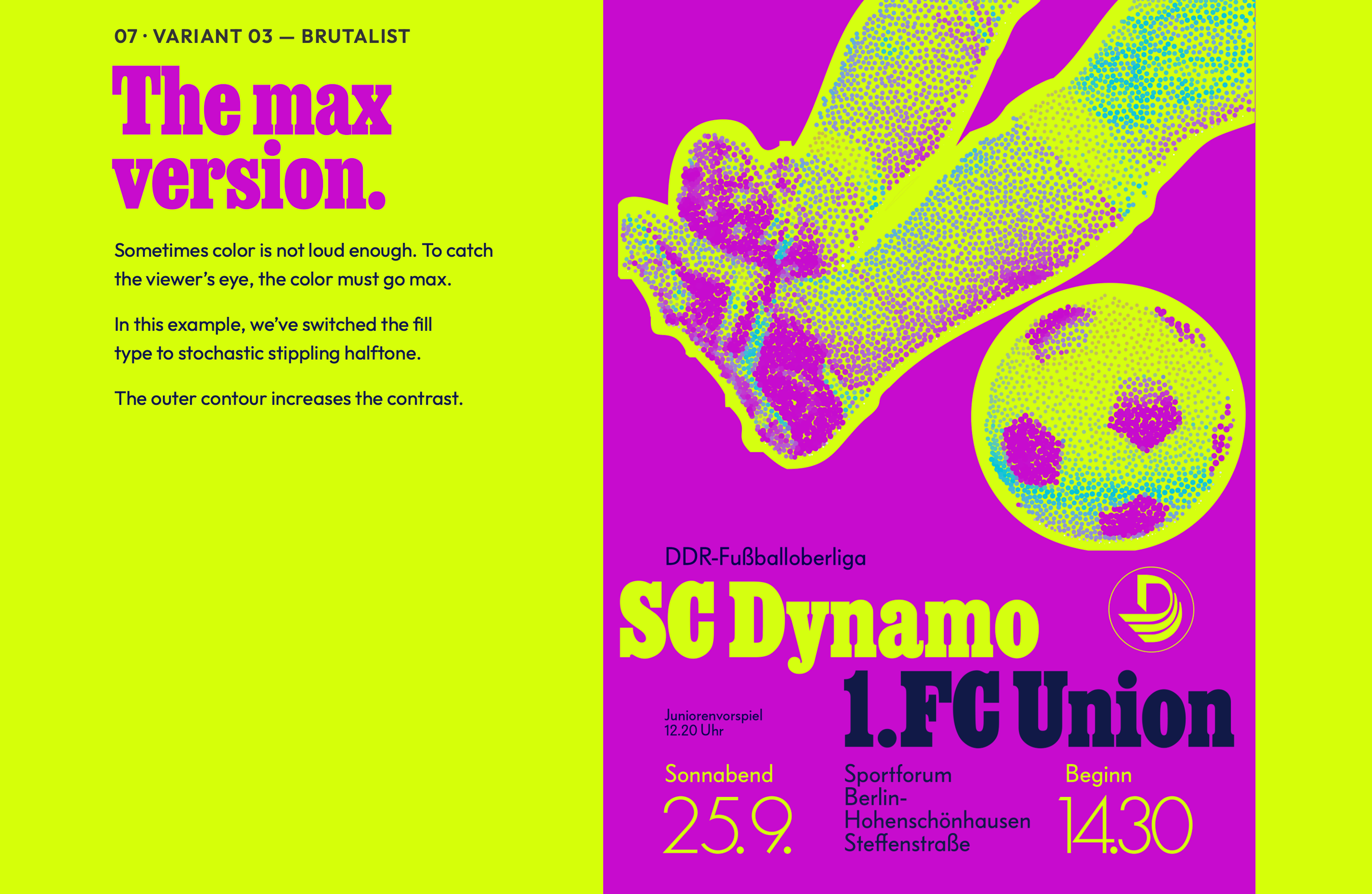
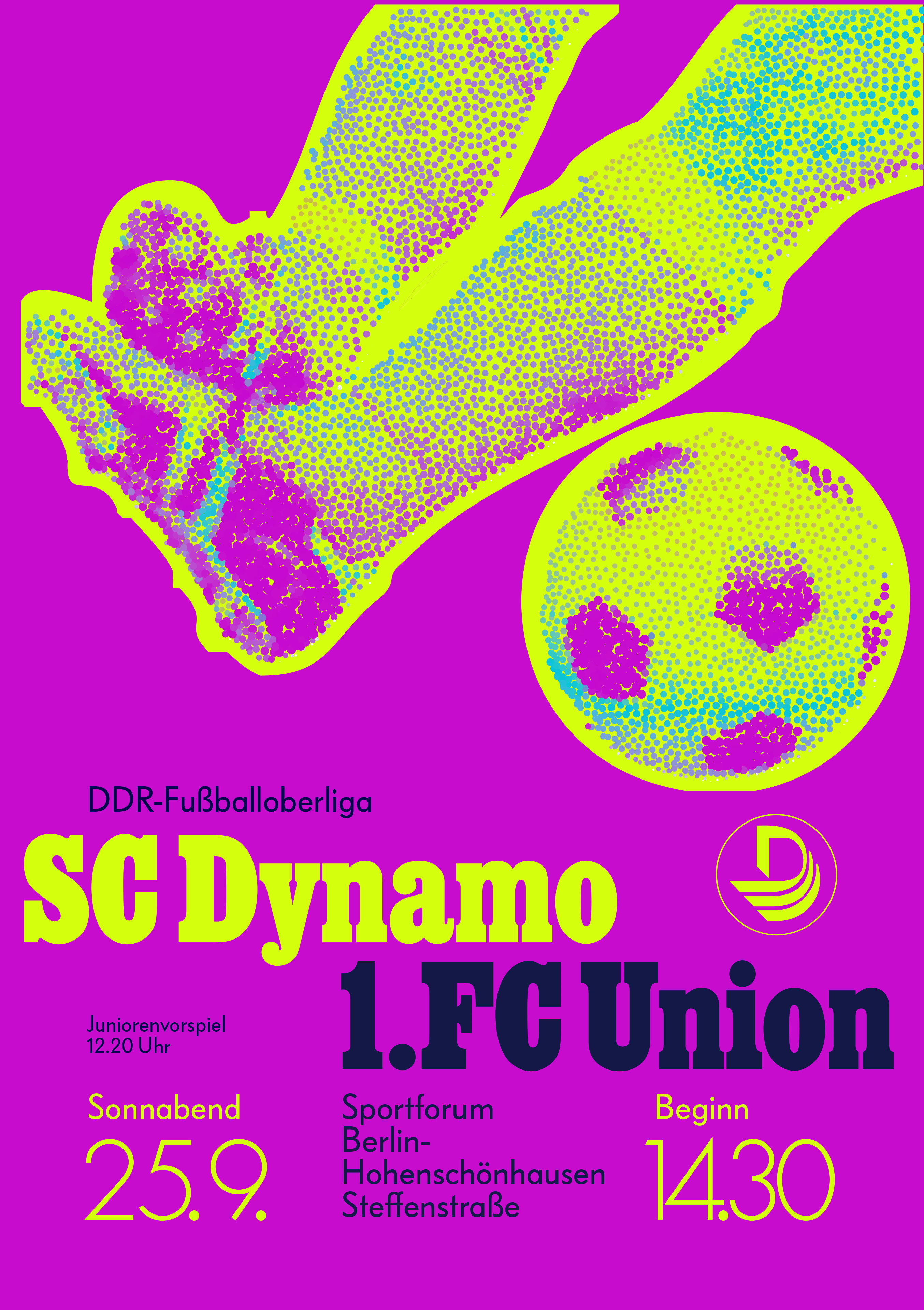
The max version.
Sometimes color is not loud enough. To catch the viewer’s eye, the color must go max.
In this example, we’ve switched the fill type to stochastic stippling Halftone.
The outer contour increases the contrast.
Lines, by fill, for any image.
Vexy Lines is a vector app for Mac and Windows that converts raster images into stylised line art with mathematically defined fills.
Composable fills.
Each fill is a procedural recipe, applied through stacked layers and masks: Linear, Wave, Radial, Halftone, Wireframe, Scribble.
The source image guides the output, but it is not the output.
Clean vector output.
The Vexy Lines output scales from small print to billboard without pixelation or banding.
The same constraint that made Kapr’s poster practical for cheap printing also makes the Vexy Lines output practical across sizes and media.
Controlled results.
Vexy Lines is for designers who want a tunable system with predictable results.
Set the source image, stack fills and masks, adjust parameters, and redraw the result as needed.
For Mac & Windows.
Vexify your image.

Vexy Playlines: Web tool that turns your photo, drawing or AI image into a monochrome or colorful vector artwork. Start free in your desktop or mobile browser!
In Vexy Playlines, you can apply one Vexy pattern style to an image. Five styles are free: Linear, Wave, Circular, Spiral, Halftone. Unlock premium pattern styles with Vexy Coins: Stipple. Hex, Contour, Low-Poly, Dither, Wireframe, Fractal, String Art, ASCII.
Choose a static color or use dynamic color sampled from your image. Tweak Thickness, Interval. Angle. Download a vector SVG.

Vexy Lines for Mac & Windows: Desktop app that turns photos, drawings and AI images into engraving-style vector artwork with unlimited stacked fills, masks and meshes.
In Vexy Lines, you build a document from layers and groups, each reading its own source image. Stack pattern fills: Linear, Wave, Radial, Circular, Spiral, Halftone, Trace, Wireframe, Scribble, Text, Fractals, Handmade, Blended, Balanced, Extended, Flowlines. Confine a fill with a mask, bend layers with a mesh.
Choose a static color or use dynamic color sampled from your image. Tweak Thickness, Interval. Angle, dashes, caps, emboss. Export SVG, PDF, EPS, PNG, JPEG.